How the AI Meal Scanner
Actually Works
No kitchen scales, no tedious spreadsheets, no endless manual logging. You take one photo of your plate — our multi-modal neural network isolates every single ingredient, approximates its 3D volume, cross-references verified lab databases, and serves up exact macros in under 2 seconds.
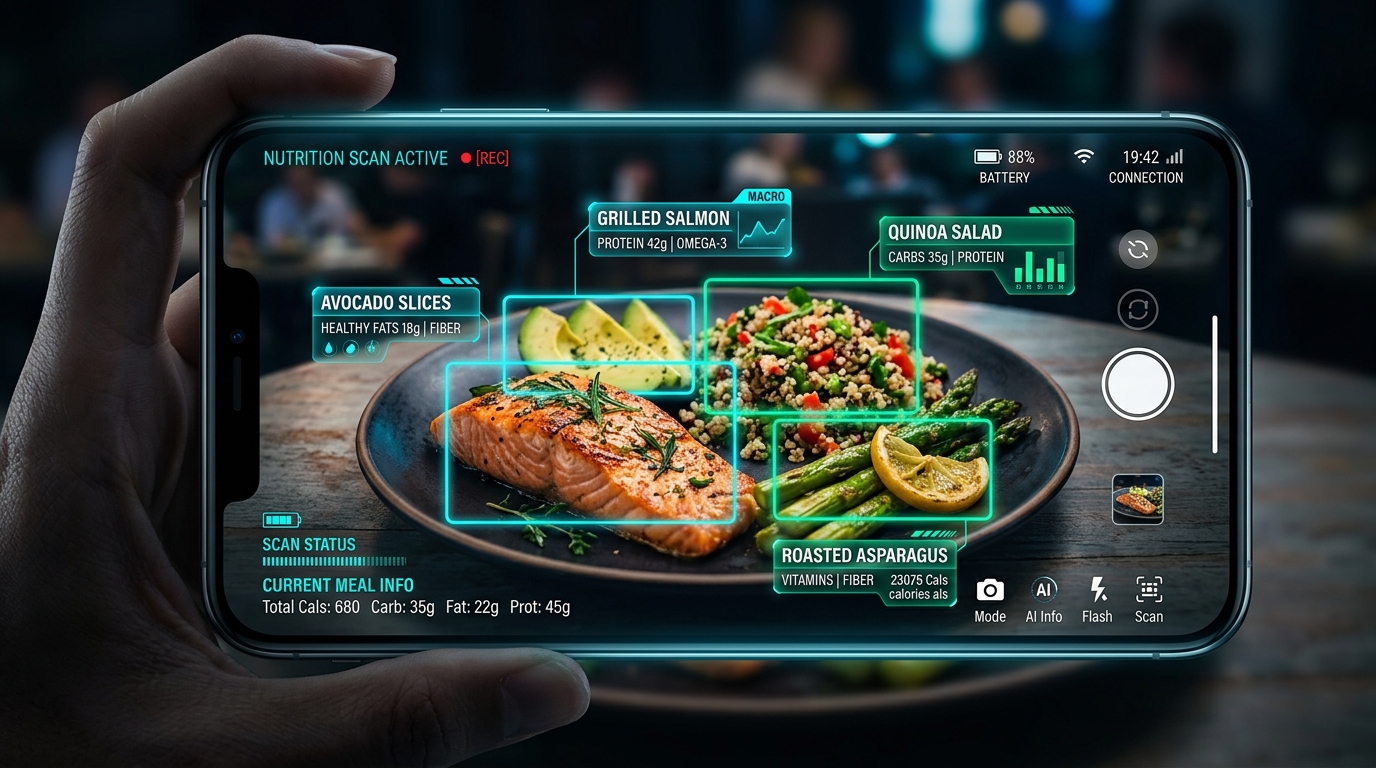
Live AI Plate Inspector
Select a sample dish below and tap any ingredient to inspect its neural vision breakdown:
Pan-Seared Salmon Fillet
Pan-seared in olive oil. High protein, rich in EPA/DHA Omega-3 fats.
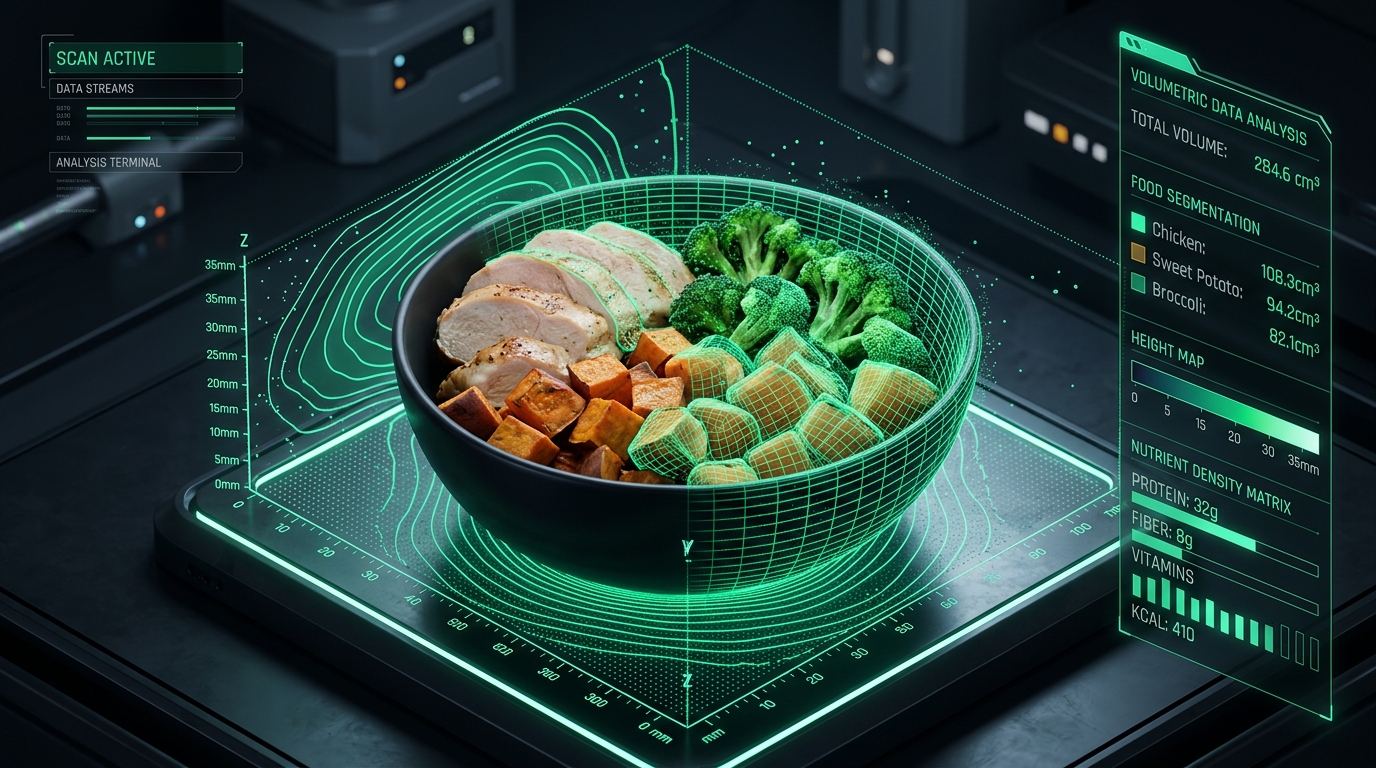
The 6-Step Technology Breakdown
Here is what executes behind the scenes during those 1.8 seconds of scanning:
1. Optical Normalization & Glare Removal
The instant you capture a photo, localized edge-enhancement normalizes ambient shadows, corrects gyro angle, and eliminates flash glare before tokenizing the image.
2. Multi-Modal Deep Neural Vision
Gemini Vision examines surface micro-textures, sear marks, glossiness, grain structure, and browning depth to distinguish fried cutlets from poached chicken.
3. Semantic Ingredient Decomposition
Complex meals aren't a mystery box. A double burger is split into individual brioche buns, 80/20 patties, melted cheddar, and secret sauce dressing.
4. 3D Volumetric Depth & Density Math
Using plate geometry (~26cm rim anchor) and perspective depth, the algorithm calculates physical cm³ volume and applies food-specific density coefficients (g/cm³).
5. Verified Nutritional Lab Mapping
Calculated gram weights map directly against USDA FoodData Central and EuroFIR lab tables for complete macronutrients, fiber, sodium, and glycemic load.
6. Longevity Shield & Allergen Guardrails
Live checks for personal allergens (gluten, dairy, nuts), dietary inflammatory scoring, AGEs glycation index, and synthetic E-additive hazard detection.
Why Volume ≠ Weight: The Density Simulator
Drag the 3D volume slider and pick a food to see how the formula Weight (g) = Volume (cm³) × Density computes real macros:
💡 Bio Fact: Dense lean muscle tissue with very little air pocket spacing (~1.04 g/cm³).
How to get 99% pinpoint scan accuracy
Simple photography habits that give the neural model razor-sharp precision:
The 45-Degree Sweet Spot
A 45-degree angle captures both surface area AND 3D height profile. Flat top-down shots can slightly underestimate steak thickness or layered rice.
Include the Plate or Fork as Anchor
Having the plate rim or a fork in the frame gives the AI an instant spatial reference (standard ~26cm dinner plate) to lock in gram calibration.
Quick Note for Secret Dressings
If you have heavy dressing buried at the bottom, use the instant voice/text memo ('with 2 tbsp caesar dressing') and the AI recalculates automatically.
Barcode & Label Scanner for Packaged Goods
For packaged protein bars, yogurts, and snacks, scanning the barcode or ingredient label yields 100% manufacturer-grade nutritional truth.
Common Questions & Answers
Everything you need to know about our multi-modal neural architecture:
Ready to test it on your next meal?
Snap a photo of whatever is in front of you and get your complete macro breakdown in seconds.
Join Open Beta